Automotive Engineering Biography
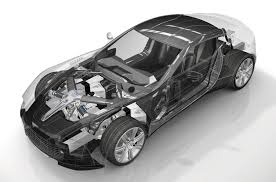
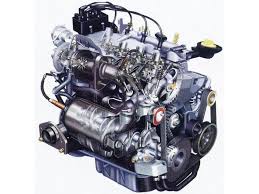
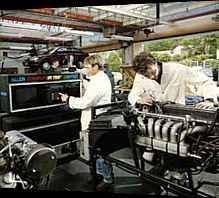
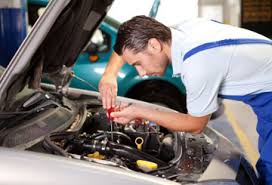
Modern automotive engineering, along with aerospace engineering and marine engineering, is a branch of vehicle engineering, incorporating elements of mechanical, electrical, electronic, software and safety engineering as applied to the design, manufacture and operation of motorcycles, automobiles, buses and trucks and their respective engineering subsystems.
Product Engineering
Some of the engineering attributes/disciplines that are of importance to the automotive engineer:
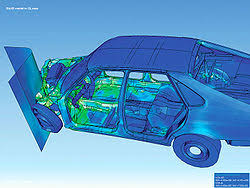
Safety Engineering: Safety Engineering is the assessment of various crash scenarios and their impact on the vehicle occupants. These are tested against very stringent governmental regulations. Some of these requirements include: Seat belt and air bag functionality, front and side impact testing, and resistance to rollover. Assessments are done with various methods and tools: Computer crash simulation (typically Finite element analysis), crash test dummies, partial system sled and full vehicle crashes.
Visualization of how a car deforms in an asymmetrical crash using finite element analysis.[1]
Fuel Economy/Emissions: Fuel economy is the measured fuel efficiency of the vehicle in miles per gallon or litres per 100 kilometers. Emissions testing the measurement of the vehicles emissions: hydrocarbons, nitrogen oxides (NOx), carbon monoxide (CO), carbon dioxide (CO2), and evaporative emissions.








Modern automotive engineering, along with aerospace engineering and marine engineering, is a branch of vehicle engineering, incorporating elements of mechanical, electrical, electronic, software and safety engineering as applied to the design, manufacture and operation of motorcycles, automobiles, buses and trucks and their respective engineering subsystems.
Product Engineering
Some of the engineering attributes/disciplines that are of importance to the automotive engineer:
Safety Engineering: Safety Engineering is the assessment of various crash scenarios and their impact on the vehicle occupants. These are tested against very stringent governmental regulations. Some of these requirements include: Seat belt and air bag functionality, front and side impact testing, and resistance to rollover. Assessments are done with various methods and tools: Computer crash simulation (typically Finite element analysis), crash test dummies, partial system sled and full vehicle crashes.
Visualization of how a car deforms in an asymmetrical crash using finite element analysis.[1]
Fuel Economy/Emissions: Fuel economy is the measured fuel efficiency of the vehicle in miles per gallon or litres per 100 kilometers. Emissions testing the measurement of the vehicles emissions: hydrocarbons, nitrogen oxides (NOx), carbon monoxide (CO), carbon dioxide (CO2), and evaporative emissions.
Automotive Engineering
Automotive Engineering
Automotive Engineering
Automotive Engineering
Automotive Engineering
Automotive Engineering
Automotive Engineering
Automotive Engineering
Automotive Engineering
Automotive Engineering
Automotive Engineering
Automotive Engineering
Automotive Engineering
Automotive Engineering
Automotive Engineering
Automotive Engineering
Automotive Engineering
Automotive Engineering
Automotive Engineering
Automotive Engineering

No comments:
Post a Comment